
As the chilly evenings set in and the scent of spices fills the air, there’s nothing quite like the comforting embrace of a hearty meal. Imagine the moment when the chuck roast hits that sizzling hot pan, creating a symphony of sounds that immediately sets the scene for a warm, cozy gathering. This Korean Style Pot Roast is more than just a meal; it’s a journey of flavors that beautifully harmonizes tender beef with the rich, spicy-sweet notes of gochujang and ginger.
With just a few simple ingredients and a slow-braising technique that does the heavy lifting, I found solving the weekday dinner dilemma becomes a breeze. Perfect for those long, languid weekends or as the star of your next family feast, this dish transforms every bite into an unforgettable delight. So roll up your sleeves and embrace this culinary adventure—your taste buds are in for a treat!
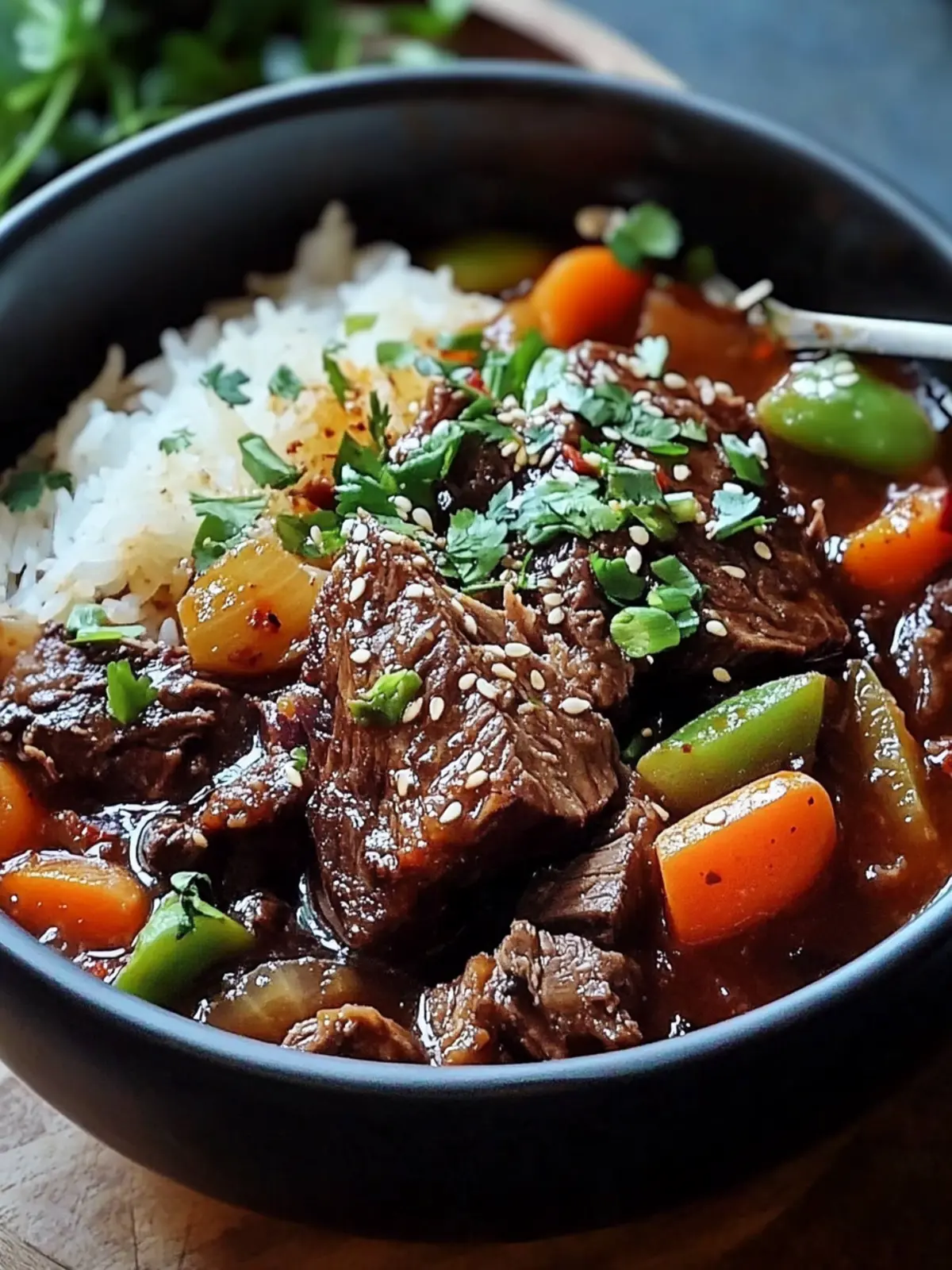
Why is Korean Style Pot Roast a Must-Try?
Comforting Flavor: This dish serves up the warmth of home-cooked meals with its luscious blend of savory and spicy-sweet notes.
One-Pot Wonder: Enjoy the ease of cooking, with minimal cleanup—perfect for busy weeknights or lazy weekends!
Tender and Moist: Slow-braising transforms the chuck roast into melt-in-your-mouth perfection.
Versatile Serving Options: Serve it over rice, mashed potatoes, or in lettuce wraps for a fun twist.
Leftover Delight: This recipe becomes even better the next day, making lunch easy and delicious!
Cultural Fusion: Experience a delightful mix of Korean flavors in a classic comfort dish that will impress your family and friends.
Korean Style Pot Roast Ingredients
• Discover the flavors behind this comforting dish!
For the Pot Roast
- Chuck Roast – The main protein providing richness and tenderness; ideal for braising due to its marbling.
- Carrots – Adds natural sweetness and complements the beef; no substitutions recommended, though other root vegetables can be used.
- Onion – Builds the flavor base; sautéed for sweetness and depth.
- Garlic – Enhances overall flavor; use fresh for best results.
- Ginger – Offers warmth and depth; may substitute with ground ginger if in a pinch.
For the Sauce
- Soy Sauce – Provides umami and saltiness; low-sodium variant can be used for better control over seasoning.
- Gochujang – Adds a unique spicy-sweet flavor; can replace with red chili paste mixed with miso and sugar if unavailable.
- Brown Sugar – Balances the heat from gochujang; can substitute with honey or maple syrup for additional flavor.
- Rice Vinegar – Adds acidity; white vinegar can be used as a substitute.
- Beef Broth – Provides moisture; homemade or store-bought works for this recipe.
For Garnishing
- Sesame Oil – Finishing flavor that adds nuttiness; drizzle before serving.
- Green Onions & Cilantro – Used as garnishes for freshness; optional but enhances presentation.
This list puts everything you need for your Korean Style Pot Roast right at your fingertips!
How to Make Korean Style Pot Roast
-
Prepare the Roast: Pat the chuck roast dry and season generously with salt and pepper. This will help create a delicious crust during searing.
-
Sear the Beef: Heat your Dutch oven over medium-high heat. Add the seasoned roast, cooking until it’s browned on all sides, about 3-4 minutes per side. Remove and set aside.
-
Sauté Aromatics: In the same pot, add chopped onion, garlic, and ginger. Sauté for 3-4 minutes until fragrant and translucent, building a flavorful base for your pot roast.
-
Mix the Sauce: Add gochujang, soy sauce, brown sugar, and rice vinegar to the pot. Stir them together, allowing the mixture to bubble slightly as it develops depth of flavor.
-
Deglaze the Pot: Pour in the beef broth while scraping up any browned bits from the bottom of the pot. This adds even more flavor to your sauce!
-
Return the Roast: Place the browned roast back into the pot and arrange carrots around it. This allows the vegetables to absorb the savory juices as everything cooks.
-
Braise in the Oven: Cover the pot and transfer it to a preheated oven at 325°F. Braise for 3 to 3.5 hours until the roast shreds easily with a fork.
-
Finish and Serve: Skim off any excess fat, then drizzle sesame oil over the top. Garnish with chopped green onions and cilantro for added freshness before serving.
-
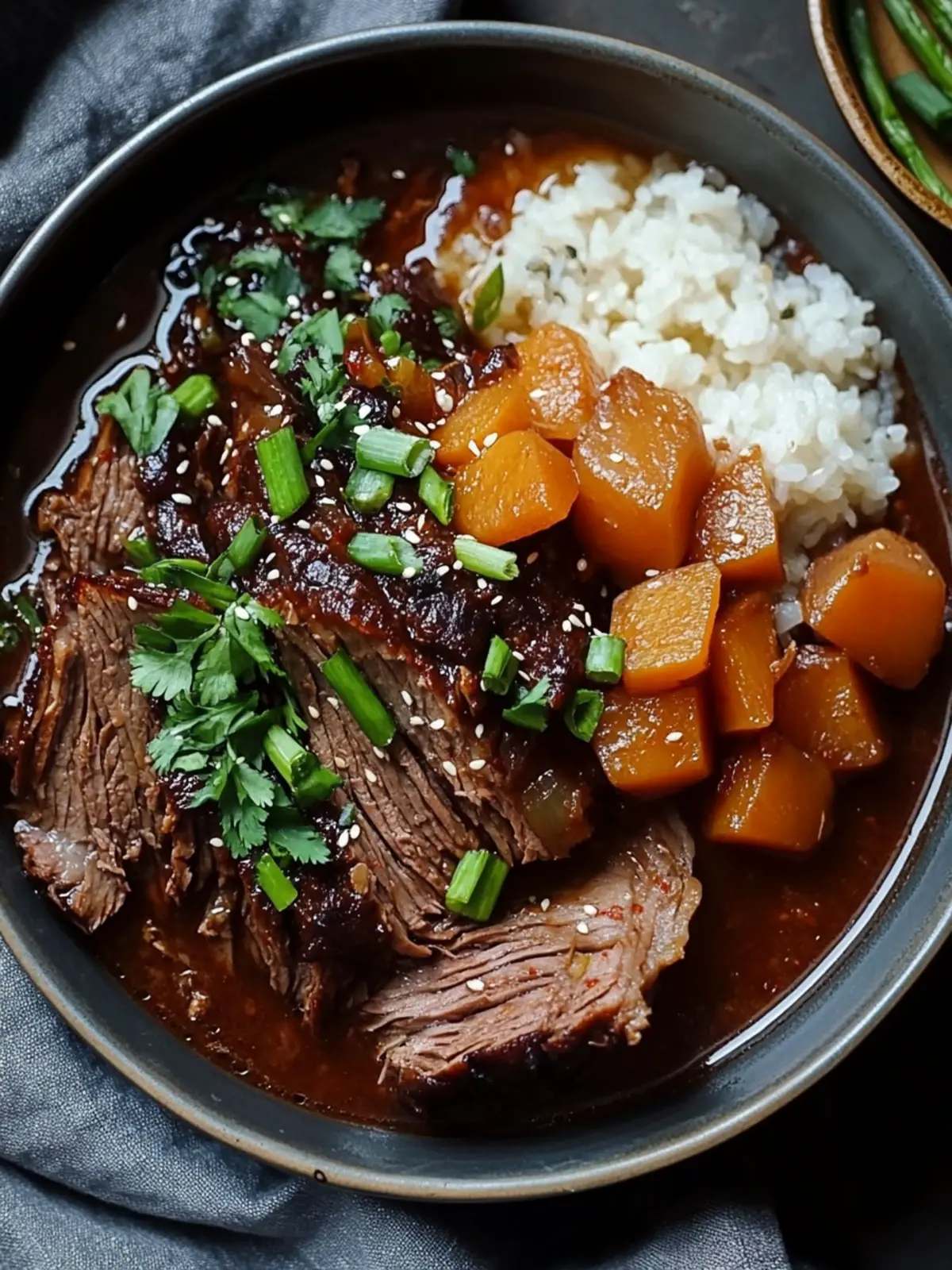
Enjoy a Delicious Meal: Serve the tender pot roast hot, over rice, fluffy mashed potatoes, or nestled in lettuce wraps for a delightful twist.
Optional: Serve with a splash of extra soy sauce for those who enjoy more flavor!
Exact quantities are listed in the recipe card below.
Make Ahead Options
These Korean Style Pot Roast preparations are perfect for busy home cooks who appreciate the benefits of meal prepping! You can season and sear the chuck roast up to 24 hours in advance, storing it in the refrigerator to enhance the flavors. Additionally, chop the onions, garlic, and ginger, then store them in an airtight container for up to 3 days. When you’re ready to serve, simply follow the steps to sauté the aromatics, mix the sauce, and braise the roast. This method not only saves you valuable time during dinner prep but also ensures that your pot roast is just as delicious and tender when served!
How to Store and Freeze Korean Style Pot Roast
Fridge: Store leftovers in an airtight container for up to 4 days. The flavors continue to deepen, making reheating a delightful experience.
Freezer: Freeze portions of the Korean Style Pot Roast in individual containers for up to 3 months. Make sure to let it cool completely before sealing to prevent freezer burn.
Reheating: Reheat gently on the stovetop or in the microwave, adding a splash of broth or water to restore moisture and flavor.
Thawing: For best results, thaw frozen roast overnight in the refrigerator before reheating. This keeps the texture tender and juicy.
Expert Tips for Korean Style Pot Roast
-
Sear for Flavor: Make sure you sear the beef until it’s deeply browned on all sides, as this develops a rich flavor base crucial for the Korean Style Pot Roast.
-
Low-Sodium Choice: Opt for low-sodium soy sauce to maintain control over your dish’s saltiness. This ensures all flavors can shine through without being overpowered.
-
Patience is Key: Avoid rushing the braising process. Cooking low and slow for 3-3.5 hours is essential for achieving that tender, melt-in-your-mouth texture.
-
Leftover Magic: This dish gets even better the next day. Make extra for delightful leftovers that are just as tasty, if not more!
-
Adapt and Enjoy: Don’t hesitate to experiment with textures by using brisket or beef shoulder. Each choice offers a unique twist to your Korean Style Pot Roast!
What to Serve with Korean Style Pot Roast?
Imagine gathering around a table filled with vibrant, comforting dishes that accompany your flavorful pot roast and elevate the entire meal experience. Each complement enhances the savory notes of your main dish while adding delightful textures and tastes.
- Steamed Rice: Perfectly cooked fluffy rice soaks up the rich sauce, creating a comforting foundation for your tender beef.
- Creamy Mashed Potatoes: Their buttery richness complements the robust flavors of the pot roast, offering a dreamy mouthfeel.
- Roasted Vegetables: A mix of seasonal veggies adds a lovely caramelized sweetness that pairs beautifully with the savory meat.
- Korean-style Lettuce Wraps: Fresh lettuce provides a refreshing crunch, balancing the depth of the pot roast, and creating a fun way to enjoy dinner!
- Kimchi: The tangy, fermented taste of kimchi introduces a bold contrast to the richness of the roast, enhancing your dining experience with an authentic touch.
- Sesame Cucumber Salad: A crisp salad with a zesty dressing provides a refreshing palate cleanser alongside the hearty main dish.
These pairing ideas transform your meal into a cheerful gathering, perfect for family or friends! Each element enhances the experience, complementing the rich, warm flavors of the Korean Style Pot Roast.
Korean Style Pot Roast Variations
Feel free to infuse your own flare into this delicious dish by trying out these fun variations!
- Different Cuts: Swap chuck roast for brisket or beef shoulder to experience varying textures in every bite.
- Spicy Kick: Add more gochujang or diced fresh chilies for a fiery flavor boost that those spice lovers will relish!
- Herbaceous Twist: Toss in fresh herbs like thyme or rosemary along with the aromatics for an earthy backdrop to the rich sauce.
- Vegetable Medley: In addition to carrots, add parsnips, potatoes, or bell peppers for colorful, nutritious additions that enhance flavor and texture.
- Asian Flair: Incorporate sliced shiitake mushrooms for an umami-rich depth that meshes beautifully with the Korean spices.
- Taco Style: Serve in tortillas with crunchy cabbage slaw for a fun fusion twist that will delight your loved ones.
- Fruity Sweetness: Mix in a handful of dried apricots or prunes near the end of cooking for a touch of natural sweetness and a unique contrast.
- Coconut Creaminess: Replace some beef broth with coconut milk for a creamy richness that adds a delightful twist to the traditional sauce.
Embrace your creativity and make this recipe your own—every variation is an opportunity for a delicious adventure!
Korean Style Pot Roast Recipe FAQs
What type of chuck roast should I choose?
Absolutely! When selecting a chuck roast, look for one that has good marbling (the streaks of fat throughout) as this will ensure richness and tenderness during braising. A roast that is bright red with minimal discoloration is ideal. Avoid any that have dark spots all over or are slimy, as these signs indicate spoilage.
How should I store leftovers for optimal freshness?
Very! To store your Korean Style Pot Roast, place leftovers in an airtight container and refrigerate for up to 4 days. Ensure that the roast cools completely before sealing to lock in moisture and flavor. For those delightful leftovers, simply reheat gently on the stovetop or in the microwave!
Can I freeze Korean Style Pot Roast?
Absolutely! You can freeze portions of Korean Style Pot Roast in individual containers for up to 3 months. Just allow the roast to cool completely before transferring it to airtight containers or freezer bags. Remove as much air as possible to prevent freezer burn. When you’re ready to enjoy it, thaw in the refrigerator overnight for the best texture.
What should I do if the roast isn’t tender after braising?
Oh dear! If your pot roast isn’t tender after the 3 to 3.5 hours specified, it may need a little more time. Simply cover it up again and allow it to braise for an additional 30 to 60 minutes. The key to a perfect braise is patience, as low and slow cooking is what transforms tough cuts of meat into unbearably tender bites.
Is this recipe suitable for those with soy allergies?
Certainly! While traditional soy sauce is a key ingredient, you can use tamari sauce, which is gluten-free and often suitable for people with soy allergies. Additionally, coconut aminos can be a great alternative, providing a similar umami flavor without soy. Always check the labels to ensure safety!
Can I modify the recipe for a different cut of meat?
Yes, indeed! If you’re looking for a different texture, consider substituting chuck roast with brisket or beef shoulder. Both options will yield delicious results while slightly altering the flavor profile. Just make sure to follow the same braising technique for the best outcome!
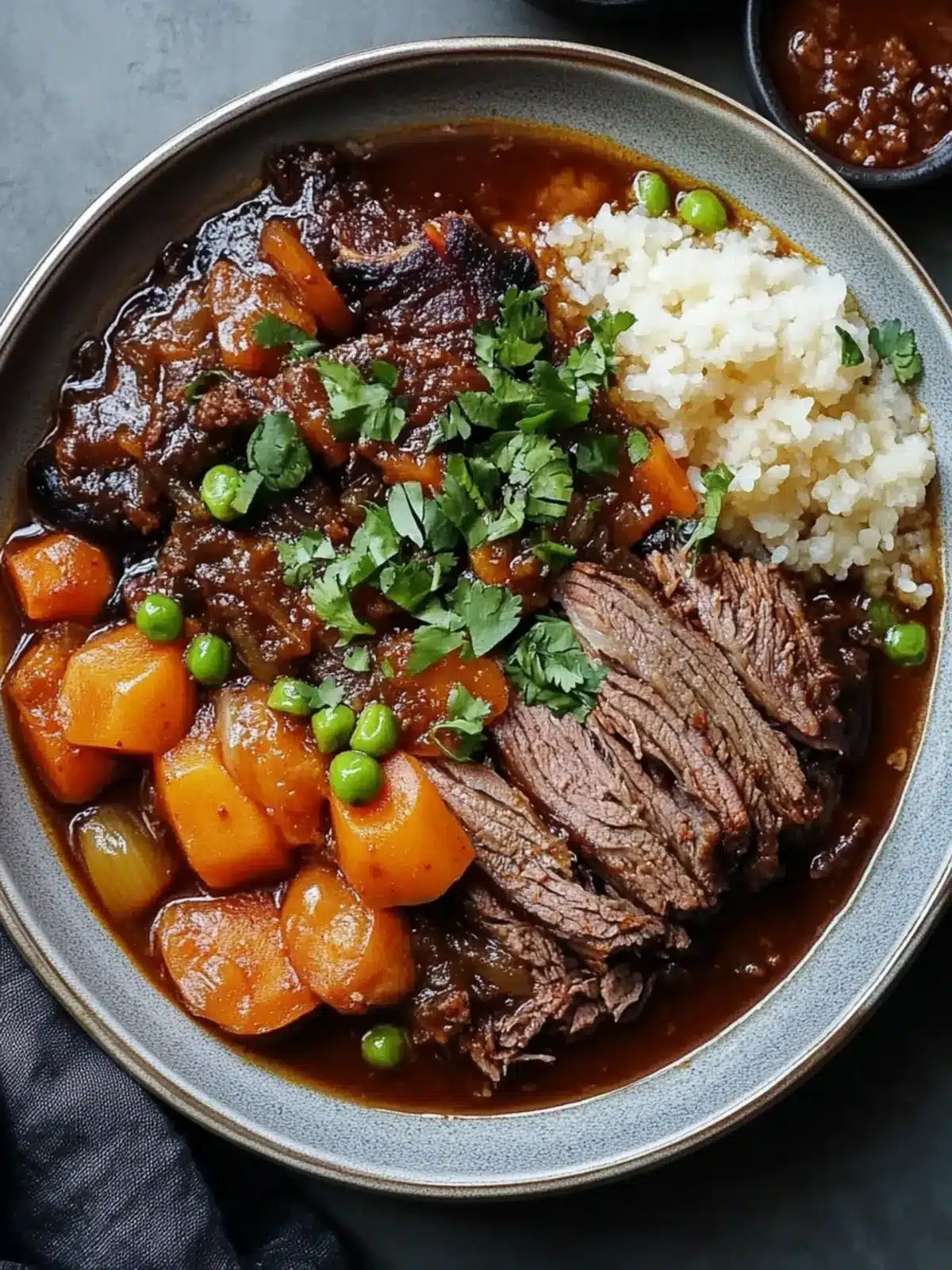
Korean Style Pot Roast: A Cozy One-Pot Wonder for Dinner
Ingredients
Equipment
Method
- Prepare the Roast: Pat the chuck roast dry and season generously with salt and pepper.
- Sear the Beef: Heat your Dutch oven over medium-high heat, add the roast, and cook until browned on all sides, about 3-4 minutes per side.
- Sauté Aromatics: In the same pot, add chopped onion, garlic, and ginger, and sauté for 3-4 minutes until fragrant.
- Mix the Sauce: Add gochujang, soy sauce, brown sugar, and rice vinegar to the pot and stir together, allowing to bubble.
- Deglaze the Pot: Pour in the beef broth while scraping up any browned bits from the bottom of the pot.
- Return the Roast: Place the browned roast back into the pot and arrange carrots around it.
- Braise in the Oven: Cover and transfer to a preheated oven at 325°F, braising for 3 to 3.5 hours.
- Finish and Serve: Skim off excess fat, drizzle sesame oil over the top and garnish with chopped green onions and cilantro.
- Enjoy a Delicious Meal: Serve the pot roast hot over rice, or in lettuce wraps for a delightful twist.